
 Search





May 31 is “No Tobacco Day”: Manifesto of the Alliance for a Tobacco-Free Italy
Tobacco use – responsible for more than 70,000 deaths each year in Italy and over eight million worldwide – must be regarded as a genuine epidemic that demands every effective means of intervention. The Alliance for a Tobacco-Free Italy invites everyone to endorse its Manifesto, which outlines scientifically proven measures to combat smoking, and denounces the inertia of governments that has allowed the tobacco industry to expand its market with misleading and harmful products.
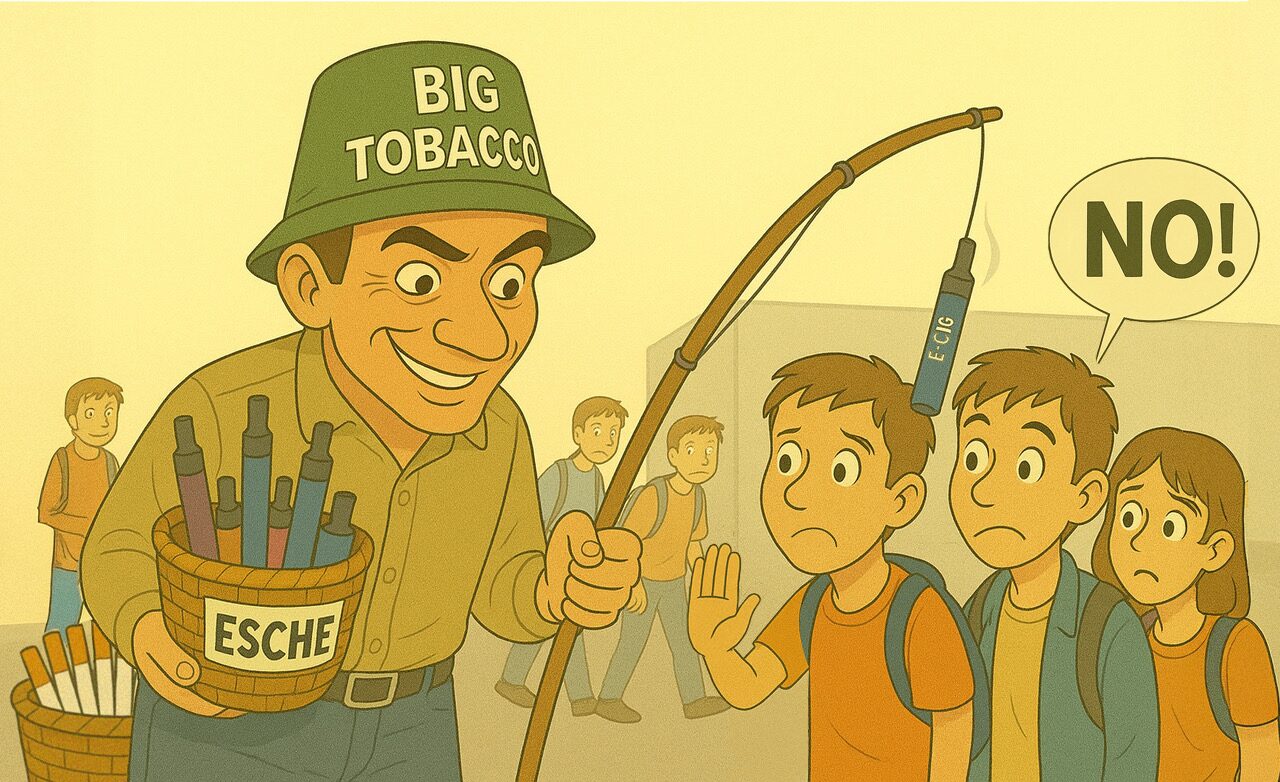
First of all, the context. What we are dealing with is a real epidemic. As stated at the beginning of the Manifesto of the Alliance for a Tobacco-Free Italy—a movement in which Zadig, represented by Eva Benelli, also takes part—tobacco remains the leading preventable cause of death and disease worldwide, with more than 70,000 deaths each year in Italy and over eight million globally. These deaths are due to cancer (lung, oesophageal, oral…), cardiovascular diseases (heart attack, stroke…), respiratory diseases (such as chronic obstructive pulmonary disease), and metabolic conditions.
Not smoking, while essential, is not enough to be fully protected: second-hand smoke is also a dangerous carcinogen and causes more than one million deaths every year among non-smokers.
And that’s not all: tobacco also harms the environment at every stage of its production cycle, contributing to deforestation and extensive pesticide use. Much has been said recently about microplastic pollution, yet few realise that the main source of the microplastics polluting our seas is cigarette butts.
An epidemic that must be ended within a clear timeframe
Tobacco use must therefore be considered a true epidemic and a major environmental harm that needs urgent action.
The Alliance for a Tobacco-Free Italy emerged from the Italian Tobacco Endgame movement – active since 2015 in support of a strategy to eliminate tobacco use in Italy – backed by leading scientific societies, foundations, and national organisations. The phrase “Tobacco endgame” reflects the idea that it is no longer enough to focus on reducing or containing tobacco use. The aim must be to “end the game,” setting the objective of a future in which tobacco consumption is virtually eliminated, remaining only within a negligible share of the population. And this must happen within a defined timeframe, not in an indefinite future. The European Union itself aims to bring the prevalence of tobacco use below 5% by 2040.
Since 2018, the group has developed extensive information and advocacy work through the website www.tobaccoendgame.it, making it an authoritative resource in Italy for independent, evidence-based information on tobacco and tobacco-control policies.
The Alliance for a Tobacco-Free Italy structures its work around five goals:
- Inform policymakers and the public about the most up-to-date and independent scientific evidence, and about effective tobacco-control policies.
- Monitor the market, the use of tobacco products, the associated harms, and track the lobbying and marketing activities of the industry.
- Promote awareness in the health and communication sectors of the health risks linked to tobacco and to the industry behind it, exposing misleading rhetoric and communication strategies.
- Advocate through campaigns and targeted actions aimed at policymakers to support the adoption of effective measures against tobacco use and the spread of nicotine.
- Support Italy’s cooperation with the World Health Organization within the Framework Convention on Tobacco Control.
In its newly released Manifesto, the Alliance invites everyone to support a set of measures backed by scientific evidence of their effectiveness in reducing tobacco use. These include higher prices for tobacco products, bans on use in all workplaces and public areas, a total prohibition of all forms of promotion, effective communication, mass-media campaigns, and prevention initiatives.
Individuals can sign the Manifesto by adding their name on the Association’s website.
E-cigarettes, heated tobacco & co.: misleading and harmful
The Manifesto also highlights a critical issue: due to governmental inaction, the tobacco industry has been able to expand its market with new products—e-cigarettes, heated tobacco, and nicotine pouches. These products have been presented as lower-risk alternatives meant to replace traditional cigarettes.
Reality has been quite different. With these new products, the industry has circumvented bans on advertising, promotion, and sponsorship, even managing to give itself a misleading “healthier” image. Meanwhile, the supposed benefits for smoking cessation have proven modest. According to many experts, these products actually hinder tobacco-control efforts. Most smokers do not quit traditional cigarettes; instead, they become dual users, gaining no meaningful reduction in risk. Experts also express serious concern over marketing strategies that appear deliberately targeted at young people.
The Manifesto reports that a true adolescent emergency is now emerging. Despite the ban on sales to minors under 18, 55% of Italian boys and girls aged 13–15 have tried e-cigarettes: the highest rate among 70 countries worldwide. Among 16-year-olds in Europe, Italian adolescents show the highest prevalence of traditional cigarette smoking. These alarming figures call for immediate and significant action.
Exposing the industry’s false claims
Tobacco products marketed as “healthier” alternatives: a paradox in itself. It is no coincidence that the theme chosen by WHO for World No Tobacco Day 2025 is “Unmask the Industry! Exposing the tactics used by the tobacco and nicotine industries to make their products attractive.”
On this topic, Scienza in rete published an article by Silvano Gallus – researcher at the Mario Negri Institute and one of the founders of the Alliance – who conducted a real fact-checking exercise addressing five common claims by the industry and debunking them through scientific evidence. It is not true, for example, that e-cigarette use among young people is low; it is not true that dual use of traditional and electronic cigarettes is rare; it is not true that heated tobacco helps people quit smoking.
As Gallus concludes: the tobacco industry continues to spread misinformation, but the evidence from scientific literature overwhelmingly points in the opposite direction.
Leggi anche...