 Search




EU-MiCare project: a meeting in Milan bringing Europe together for migrants’ mental health
Zadig’s Milan office hosted the Train the trainers event, a key milestone of the European EU-MiCare project dedicated to the mental health of migrants and refugees.
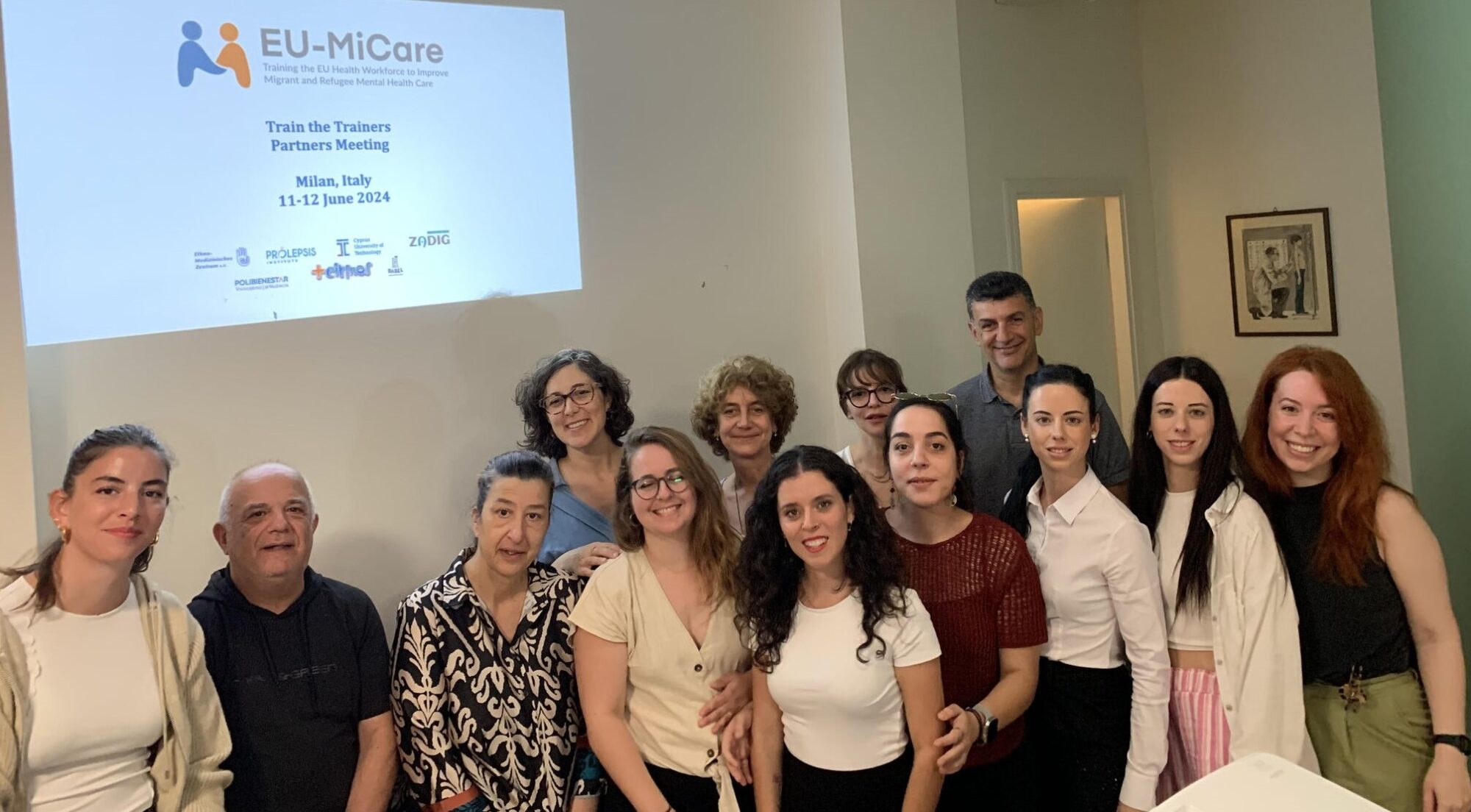
In June, the European partners of the EU-MiCare project consortium, of which Zadig is also a partner, arrived in Milan at Zadig’s headquarters.
Colleagues from Cyprus, Germany, Greece and Spain, together with members of Zadig, worked side by side for two days on the training content focused on the mental health of migrants and refugees, now in its final stages.
EU-MiCare is a three-year project that is developing training programmes for professionals working with migrant populations, with a particular focus on mental health issues, including prevention, recognition, and timely and appropriate management.
The June meeting, Train the trainers, provided an opportunity for project members (six partners from five countries) to discuss the content of the four planned training modules. Each module has been developed by different partners and will be uploaded in the coming months to the platform developed by Zadig, in English and in the languages of the partner countries (Greek, Italian, Spanish and German).
The meeting also made it possible to jointly explore the opportunities and features offered by the platform, with the aim of optimising access to the content produced. The materials will be uploaded and made available for online training, as well as through events organised in the participating countries during the final phase of the project, in 2025.
In the meantime, the project website hosts the materials produced during the first year and a half of work. These include analyses of local contexts and existing training provision, as well as the outcomes of focus groups organised with professionals in the field on training needs and key topics to be addressed.
EU-MiCare is funded by the European Union. The views expressed are those of the author(s) only and do not necessarily reflect those of the European Union or the European Education and Culture Executive Agency (EACEA). Neither the European Union nor the EACEA can be held responsible for them.

Read also...