 Search





Ethics and Artificial Intelligence for Health: WHO Guidelines
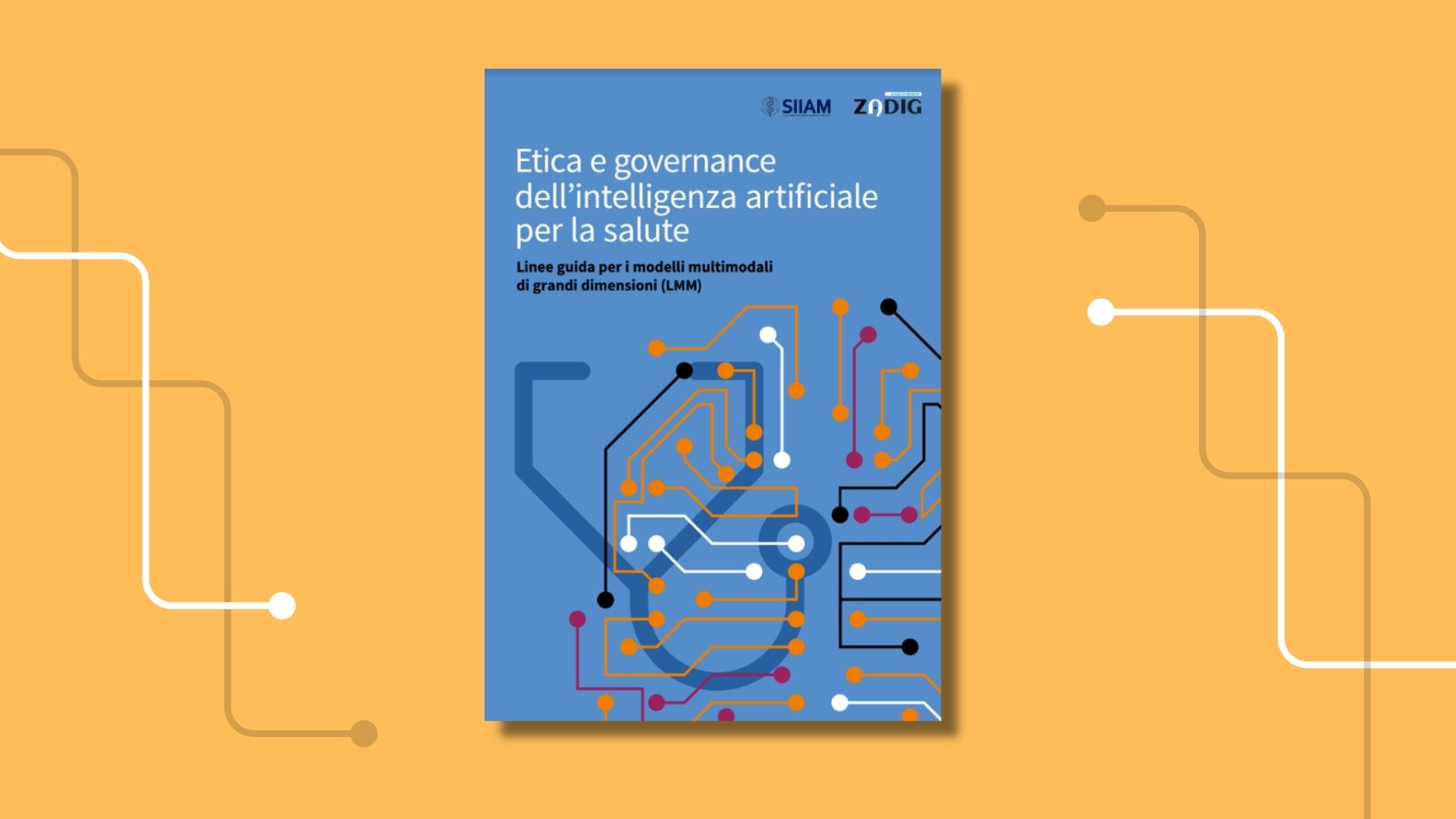
In collaboration with the Italian Society of Artificial Intelligence in Medicine (SIIAM), Zadig publishes the Italian edition of the WHO guidelines on ethics and governance of artificial intelligence for health.
A commitment to technological innovation that serves the health and well-being of all, with particular attention to the most vulnerable groups in society.
Imagining the use of artificial intelligence in diagnosis, clinical care, research and healthcare more broadly seemed like a distant future until recently.
Yet it is already a reality that must be governed.
Artificial intelligence offers significant opportunities to improve healthcare and has the potential to transform health systems. At the same time, it entails numerous risks that must be understood and managed through an ethical and responsible approach.
It is from this perspective that, in January 2024, the WHO published the document Ethics and governance of artificial intelligence for health: guidance on large multi-modal models, a set of guidelines on generative artificial intelligence (the now well-known LMMs, large multimodal models, which also include the widely used ChatGPT).
In this document, the WHO sets out more than 40 recommendations addressed to governments, artificial intelligence technology companies and healthcare professionals, with the aim of ensuring a responsible, sustainable and inclusive use of generative artificial intelligence for health and healthcare, in line with the following core ethical principles:
• safeguarding autonomy, whereby control over healthcare systems and medical decisions must always remain in human hands;
• promoting well-being and safety, so that the impacts of use are beneficial to health without exposing individuals to risks;
• ensuring transparency, explainability and comprehensibility of artificial intelligence technologies;
• fostering responsibility and accountability, in order to guarantee appropriate use by adequately trained individuals;
• ensuring inclusivity and equity by avoiding bias and monitoring discriminatory effects that are already present in these models;
• promoting sustainable artificial intelligence for healthcare systems, the environment and workplaces.
The guidelines were translated into Italian by a working group from the Italian Society of Artificial Intelligence in Medicine – which also produced an entirely new chapter to adapt these international guidelines to the Italian context – together with Zadig, each contributing according to their respective areas of expertise.
The participation of Zadig Società Benefit in this non-profit and entirely free initiative (the guidelines will be freely available on this website and through other channels) highlights our commitment to technological innovation that serves health and well-being for all, with particular attention to the most vulnerable groups in society.
Read also...